−90%
Winter solar harvest, in conventional rooftop systems. The panels aren’t the problem — the sun angle is.
Winter is when the north needs the most energy and gets the least sun. Existing systems — air heat pumps, lithium batteries, transported fossil fuels, the grid — all give up exactly where the cold starts. This is the core value of Solar-Mass: it heats homes when everything else struggles.
Three integrated technologies, providing one autonomous solution. Solar panels harvest, the Geothermal Sand Battery stores, and Solar-Mass ML decides — in real time — where every kWh should go.
Roof array pitched to charge the Geothermal Sand Battery through summer and fall. Wall array mounted vertical and flush — 90°, tight to the wall — to capture the low winter sun when the north needs it most.
Solar-Mass ML control software is based on real-time sensory data and predictive forecasting of external weather impact and internal demand. This maximizes energy production and storage to meet the demands of the home.
Heat is the highest energy demand in winter for any home. The Geothermal Sand Battery stores it, and hydronic in-floor heating distributes it year-round. Installed beside the house — as simple as a septic field — it can sit above ground or be buried below the frost line. Solar panels and a sodium-ion battery bank power computers and appliances.
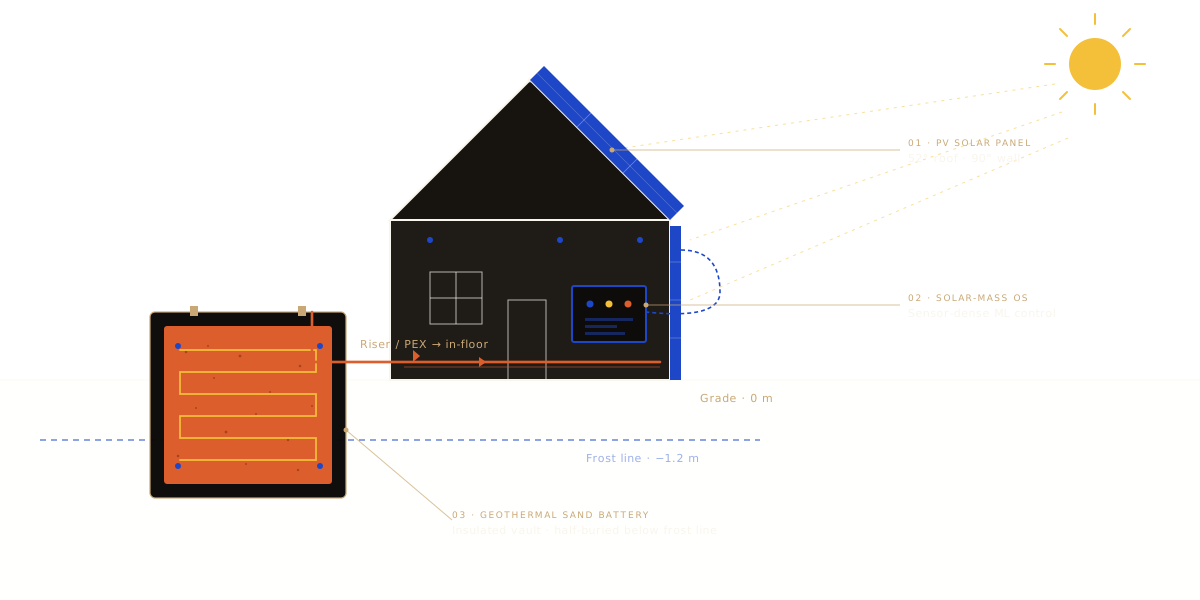
Solar above, electronics at the controls, and the Geothermal Sand Battery beside the house. The roof is pitched at 52° — the ideal compromise for winter heat production and shedding snow. Heat moves through high-temperature PEX into the floor; data travels into Solar-Mass OS, where every decision happens.
21days
A 64 m³ Geothermal Sand Battery carries a 186 m² home through a 21-day cold snap at −40 °C — burning no fossil fuels or grid power.
Summer charge → winter draw · Hydronic delivery · Hot-water buffer reservoir · Cold-snap endurance mode
We’re not iterating on air heat pumps. We’re replacing the entire premise — combustion, grid, and the seasonal storage gap — with one integrated architecture.